«With regard to the use of bicycle helmets, science broadly tries to answer two main questions. At a societal level, “what is the effect of a public health policy that requires or promotes helmets?” and at an individual level, “what is the effect of wearing a helmet?” Both questions are methodologically challenging and contentious.»
«case-control studies, many of which have shown that people wearing helmets are less likely to have a head injury. Such findings suggest that, for individuals, helmets confer a benefit. These studies, however, are vulnerable to many methodological shortcomings.»
«Even if helmets do have an effect on head injury rates, it would not necessarily follow that legislation would have public health benefits overall. This is because of “second round” effects, such as changes in cycling rates, which may affect individual and population health»
«The enduring popularity of helmets as a proposed major intervention for increased road safety may therefore lie not with their direct benefits—which seem too modest to capture compared with other strategies—but more with the cultural, psychological, and political aspects of popular debate around risk.»
Caro Joao, já lhe mostrei! Não se lembra?
O número de acidentes graves, ponderado pelo número de Km percorridos em cada modo de deslocação (como não podia deixar de ser), é superior para os peões que para os ciclistas.
Esse artigos que você mostra não trazem nada de novo… é óbvio que SE malharmos de cabeça, um capacete protege bastante bem. Isto é válido em qualquer realidade, seja em cima de uma bicicleta, ou se cairmos da cadeira.
João @Freire tás farto de te repetir. É claro q se batermos com a cabeça o capacete protege, de igual modo q se levarmos um tiro um colete anti-bala tb protege.
Mas não é isso q deve ser analisado. O q deve ser analisado é a perspectiva global de uma lei de obrigatoriedade ou campanha de sensibilização para o uso do capacete, e os efeitos generalizados disso para a sociedade.
E não há nenhum estudo q mostre de forma conclusiva q leis ou campanhas para o uso do capacete trazem vantagens de saúde em termos globais para a sociedade!
Se é assim tão claro então porque carga de água estão interessados em retirar relevância à importância do uso do capacete de modo a que a utilização do capacete não seja obrigatória?
Que mais importante para a sociedade do que a redução em mais de 70% das lesões na cabeça pela utilização do capacete?
Deaths among bicyclists 20 years and older have nearly tripled since 1975. As the popularity of cycling has increased over the years, so has the need to educate and implement more safety measures to keep riders safe. The following facts were posted just last month from the Department of Transportation Fatality Analysis Reporting System. (All data pertains to full year 2014):
Quando tiver tempo, volto a mostrar-lhe.
O estudo não se inclinava sobre o número médio de km percorridos por deslocação, era no número total de Km percorridos. O número de acidentes graves é que era ponderado por esse número de Km percorridos.
Mais eficaz para a saúde humana e redução da mortalidade será a proibição total de fumar do que a obrigação do uso de capacete.
Fala-se em tornar obrigatório o uso do capacete e não a sua proibição.
Portanto, sendo algo que não é obrigatório mas é aconselhado, todos os que querem podem usá-lo, não serão multados ou mal vistos na sociedade. Exactamente como os que escolhem não usar. Há Liberdade de escolha. E para o bem da consciência global, que essa Liberdade se mantenha.
Cresci sem usar capacete e hoje em dia é raro usar, entretanto alguns amigos e conhecidos já faleceram com cancros associados ao tabagismo. Se ao menos eles tivessem sempre fumado cigarros electrónicos…
Mostra-me um estudo q diga q a redução de lesões graves e mortes devido a leis de obrigatoriedade ou campanhas de sensibilização de utilização do capacete em uso quotidiano da bicicleta é superior ao aumento de lesões graves e mortes devido à consequente maior utilização do automóvel e ao maior nível de sedentarismo.
O que se está a tratar são os benefícios do uso do capacete
Em todos os posts colocados até agora coloquei um link que demonstra sem sombra de dúvida os benefícios do uso do capacete e justificam a sua obrigatoriedade já que salva vidas.
Os senhores façam como quiserem
Dou o meu dever como concluído, cabe agora à consciência de cada um
Bike helmet law aims to reduce injuries
Etatistics from the Winnipeg Health Region show that there were 14 deaths and 910 hospitalizations due to cycling injuries in Winnipeg between 2000 and 2010, accounting for 7,756 hospital days. Of Canadians hospitalized or dying due to a cycling-related head injury, 80 per cent were not wearing a helmet when their injury occurred.
Pediatric bicycle-related head injuries: a population-based study in a county without a helmet law
Background
Head injuries are the leading cause of death among cyclists, 85 % of which can be prevented by wearing a bicycle helmet. This study aims to estimate the incidence of pediatric bicycle-related injuries in Olmsted County and assess differences in injuries between those wearing helmets vs. not.
Conclusions
Children and adolescents continue to ride bicycles without wearing helmets, resulting in severe head and facial injuries and mortality.
@Freire, a MUBi é feita por sócios voluntários e rege-se por uma série de premissas sobre as quais estes se identificam e defendem. Poderá chegar o dia em que a MUBi seja formada por sócios voluntários que defendam a obrigatoriedade do uso do capacete. Se esse dia chegar, será uma luta legítima. Os sócios voluntários não serão certamente os actuais, mas outros virão. Até lá, o que está a fazer é criar entropia no sistema tentando que a MUBi mude uma das suas premissas base. Isso não vai acontecer porque não existem argumentos que o justifiquem.
Vamos continuar a defender a segurança pelos números. OBRIGAR toda a gente a usar capacete não vai reduzir a sinistralidade nas nossas ruas. Mais gente a pedalar, isso sim, desempenhará essa função.
Bicycle riding is a popular form of recreation among persons of all ages, and related injuries cause significant morbidity and mortality. Most injuries occur in males and are associated with riding at high speed; most serious injuries and fatalities result from collisions with motor vehicles. Although superficial soft tissue injuries and musculoskeletal trauma are the most common injuries, head injuries are responsible for most fatalities and long-term disabilities. Overuse injuries may contribute to a variety of musculoskeletal complaints, compression neuropathies, perineal and genital complaints. Physicians treating such patients should consider medical factors, as well as suggest adjusting various components of the bicycle, such as the seat height and handlebars. Encouraging bicycle riders to wear helmets is key to preventing injuries; protective clothing and equipment, and general safety advice also may offer some protection.
Para nós a segurança é O elemento importante. Daí defendermos a segurança pelo números:
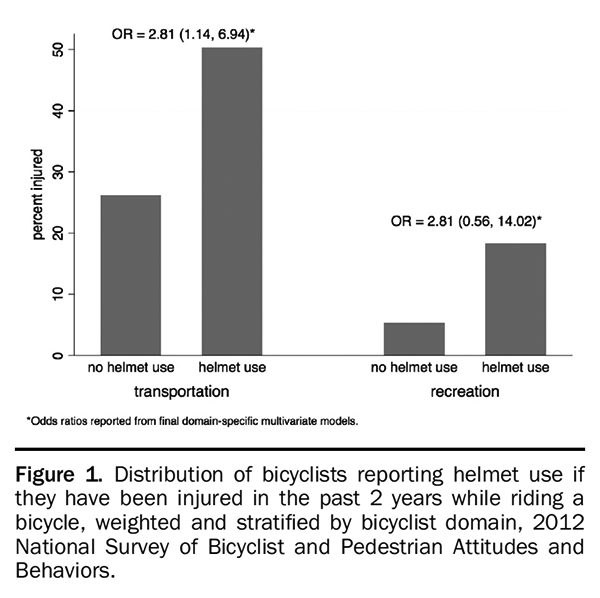
December 2016: Correlates of Helmet Use Among Recreation and Transportation Bicyclists (PDF 206k) published by the American Journal of Preventative Medicine found that surveyed cyclist respondents who wore a helmet had more than twice the odds of suffering an injury over the previous two years than cyclists not wearing helmets, whether riding for transportation or recreation.
The study graphic below shows the estimated percent who were injured among helmet and non-helmet wearers, providing further evidence that risk compensation increases the odds of a bicycle crash and helping to explain why mandatory helmet regulations in the US have had disastrous results.
New study finds helmets reduce chance of serious head injury
23 September 2016. One of the biggest worldwide studies of bike helmet use by injured cyclists has found that helmets reduce the chances of serious injury by 70 per cent.